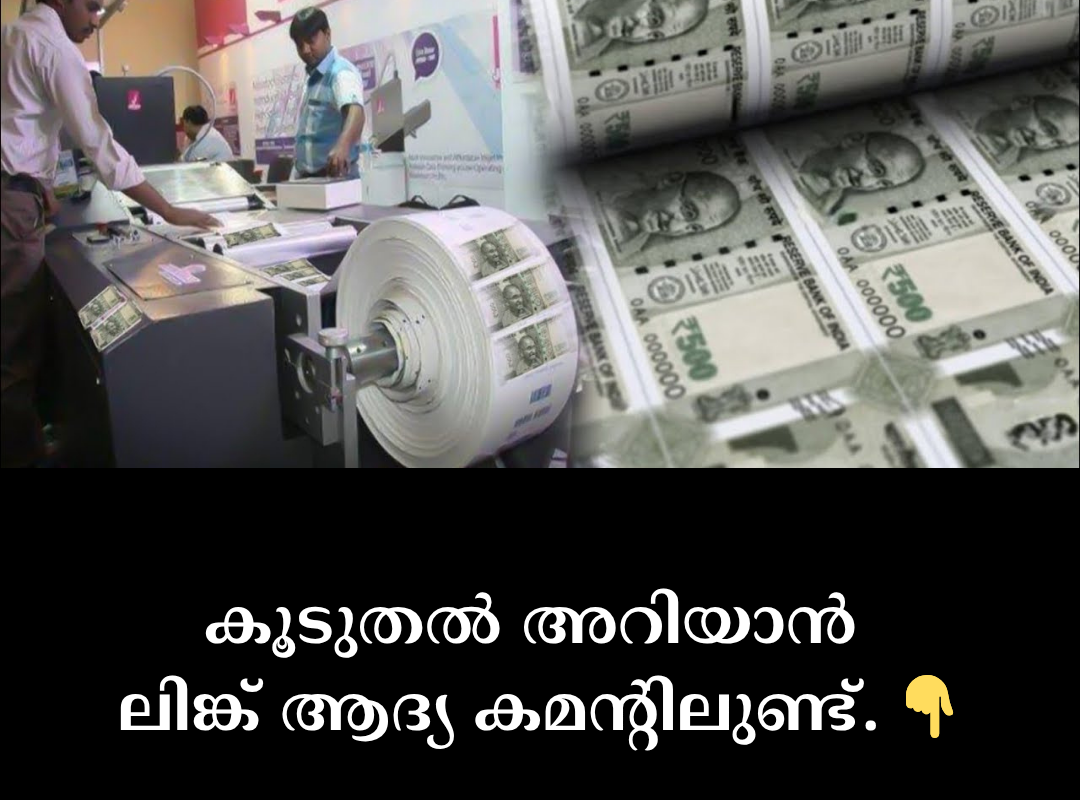
Printing currency notes is a fascinating thing for everyone. But it is a very complex process, unlike ordinary printers. In India, money is printed in secure presses under the Reserve Bank of India (RBI).
This is not a normal factory job, but a process done with high security measures. Here is a simple explanation of how it works:
Main steps in printing money:
Special paper production: The paper used for notes is not ordinary paper. It is made of cotton fibers. It has special strength and texture. Before printing this paper, watermarks are included in it.
Intaglio Printing: Don’t you feel that some parts of the note are raised when you touch it? That is intaglio printing. This is how Gandhiji’s picture and the parts where the value is written on the note are printed. This prevents duplication using ordinary printers.
Adding Security Features:
Security Thread: Special threads that can be seen inside the note when held up to light.
Optical Variable Ink: Ink that changes color when the notes are tilted.
Micro Printing: Fine letters that are difficult to see with the naked eye.
Cutting and Packing: Notes are printed in large sheets. These are then cut to the exact size using automatic machines and sealed into bundles.
The Reasoning of Printing Money
Why print a lot of money and give it to everyone?
This is an important question. Printing money if done unwisely can lead to inflation. If more money is in the market than goods, the prices of goods will rise sharply. Therefore, the RBI prints money according to the country’s economic growth and GDP.